
About us
Attendance that survives being argued about
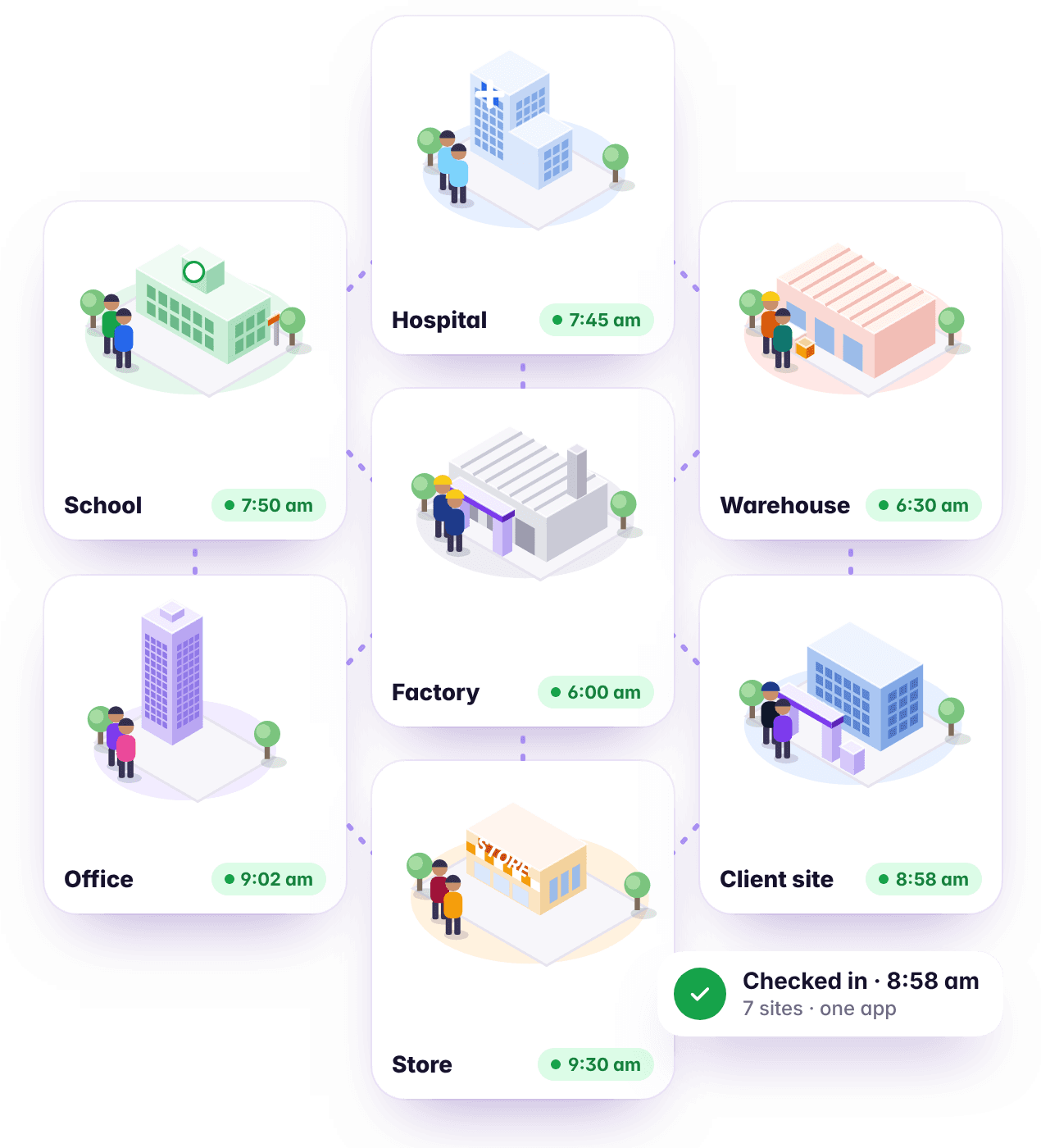
We build attendance, shifts and payroll for any company whose people don't all sit in one office — offices, factories, warehouses, hospitals, schools, stores and client sites. The point of the software is the record it leaves behind.
Why we built Timix
The people who keep things running are rarely in one place
Most of the people who keep a business running aren't at a desk in one office. A factory shift that starts at 6 am, nurses on a rotating roster, teachers across two campuses, staff covering three stores in a week, a guard on a night post. Their attendance still lives on a paper register at the gate, a photo on WhatsApp, or a supervisor's memory.
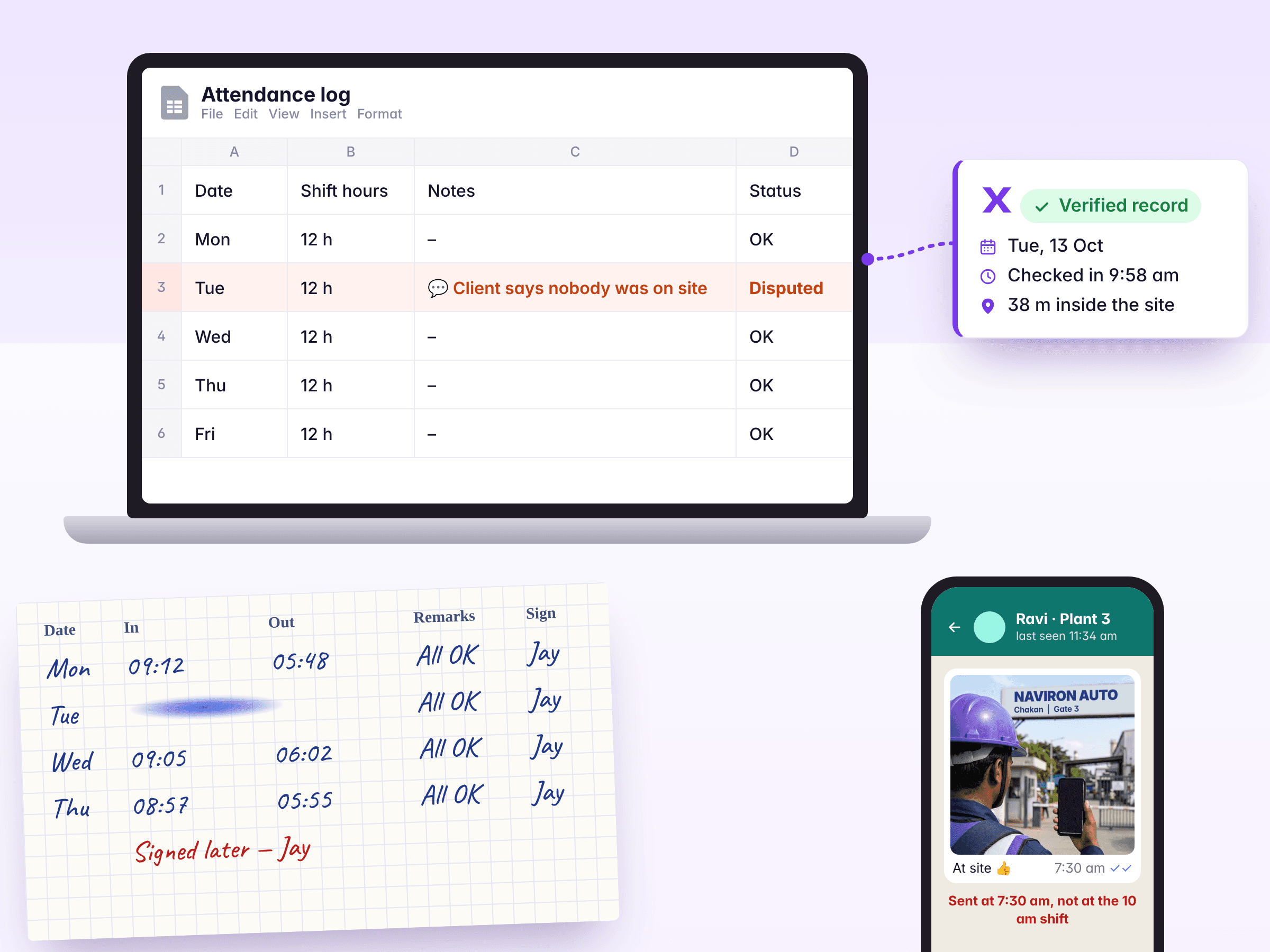
So the month ends in an argument. The client says the post was empty; the agency says it was covered. An employee says they worked the day; the register says they didn't. Somebody retypes the hours into a spreadsheet, and the payslip is only as right as that afternoon.
We built Timix so the record is made at the gate, at the moment it happens — and so it still means something when somebody questions it three months later.
What we're changing
From a register nobody trusts to a record that holds up
- 01
A paper register signed at the gate
A check-in that keeps the place, the time and how far from the site it was made
Place · time · distance
- 02
Hours retyped into a spreadsheet at month end
Payslips built from the same check-ins, PF and ESI included
No retyping
- 03
A client asking whether the post was covered
A view-only login to their own site, as it happens
Live, view-only
- 04
Software that needs a trainer before anyone can use it
An app a new guard can use on day one, on the phone they already own
Day one
Who it helps
Everyone who used to argue about the month
Any company with people across shifts, sites or departments — and everyone inside it.
Staff
See every day they worked and what they're owed, and ask for a fix when a day is wrong.
Supervisors
Mark people in from their own phone when a phone dies, with both names on the record.
Owners
Know who came in today, across every site, without calling anyone.
Clients
Check their own site's attendance instead of waiting for a weekly email.
How we work
Four things we won't trade away
- 1
Every claim maps to something that ships
If a page here says the app does it, the app does it today. Where something is partial we describe the part that works and name the part that doesn't, which is why each feature carries its own limit rather than a footnote.
- 2
A reading we can't stand behind is refused
A position accurate to worse than a hundred metres tells you nothing about whether somebody was at the gate. So a geofence check-in is refused and the person is asked to step outside — rather than stored as a maybe and discovered three months later.
- 3
One set of numbers, not two
The hours on the payslip and the hours on the invoice come from the same check-ins the client can see. Where the two differ it is because somebody decided they should, not because two people typed two spreadsheets.
- 4
We say when it isn't a fit
If your staff are remote and location doesn't matter, most of what we do is wasted on you. You'll hear that on the first call rather than after a demo, a pilot and a quarter.
See whether we're right about your operation
Twenty minutes with your roster and two of your sites — and a straight answer about where it doesn't fit.